As part of their community placement, the nursing students assessed local health needs and identified several challenges, including poor waste management, stagnant water in drainage trenches and a lack of basic first-aid medicines in schools. Rather than limiting their engagement to identifying these problems, the students worked with community members to implement practical interventions.
The team participated in a general cleaning exercise at a local market, working alongside residents who contributed brooms, hoes, slashes and sacks. The activity promoted environmental cleanliness and included sensitisation on proper waste segregation and its importance in maintaining a healthy community.
During a home visit, the students also identified a household that lacked a suitable utensil-drying rack. Working with the homeowner, they used locally available materials to construct one, demonstrating how simple, affordable and locally driven interventions can improve household hygiene and sanitation.
The project further extended to Global Senior Secondary School, where the students conducted a health education session focusing on hygiene and sanitation. The engagement provided an opportunity to promote healthy practices among learners and demonstrated the importance of preventive health education in schools and communities.
The implementation process also offered valuable lessons. The students had only two weeks to complete the planned activities, limiting opportunities for follow-up and assessment of long-term impact. Community participation was affected by the planting season, when many residents were occupied with agricultural activities. The team also encountered expectations of rewards from some community members, highlighting the importance of continued engagement and shared responsibility in community service.
Despite these challenges, the project demonstrated the value of collaboration, reflection and community ownership in developing practical solutions to local health concerns. It reinforced the importance of enabling communities to identify, own and address their challenges while helping students reflect on how their professional knowledge can contribute to social transformation.
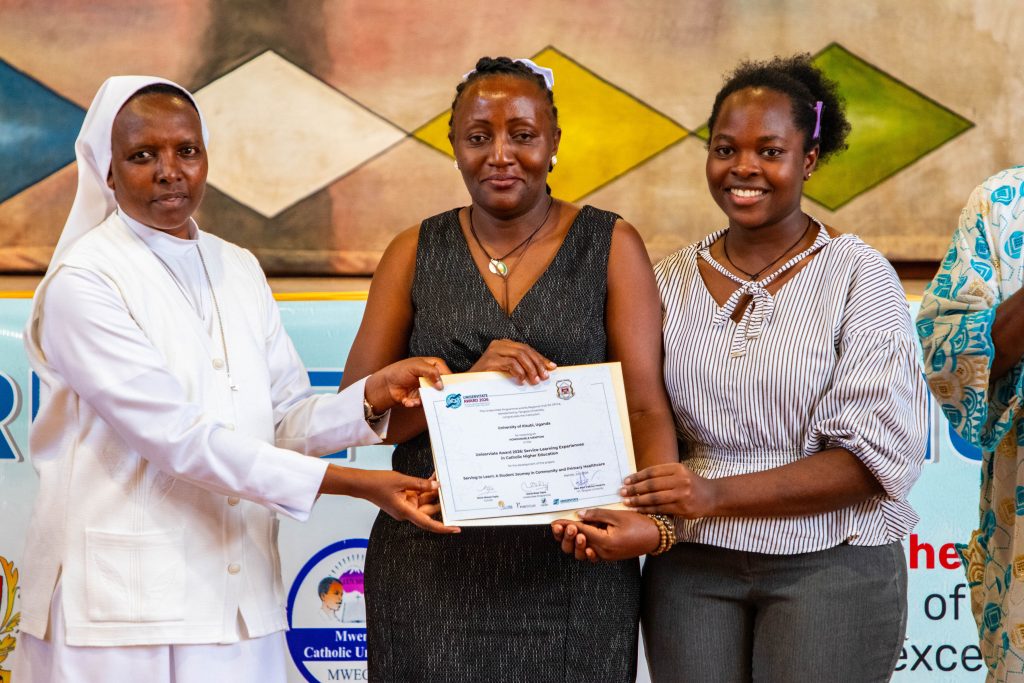
The €1,000 Honorary Mention Award recognises the collective efforts of the students, the School of Nursing and Midwifery, University management, participating communities and partners who supported the initiative. The recognition also provides an opportunity to strengthen service-learning within the Faculty of Health Sciences, particularly in the School of Nursing and Midwifery, as recommended in the project report.
This achievement reinforces the University of Kisubi’s commitment to education that extends beyond the classroom. By connecting academic learning with community needs, the University continues to nurture compassionate, responsible and practice-oriented health professionals who apply their knowledge in service to society